California’s New Zone 0 Rules
Real Estate August 29, 2026
Real Estate August 29, 2026
For Californians living in wildfire country, defensible space has been part of homeownership for years. But California is now taking that concept closer to the house than ever before.
On August 19, 2026, the California Board of Forestry and Fire Protection approved its final draft of the state’s new Zone 0 defensible space regulations, establishing wildfire-safety standards for the first five feet surrounding certain homes and structures.
That five-foot area may seem small. From a wildfire standpoint, however, it can be one of the most important areas on the entire property.
For homeowners in communities such as Castaic, Hasley Canyon, Santa Clarita, Acton, Agua Dulce, Lake Hughes and other wildfire-prone areas throughout Southern California, Zone 0 deserves attention now—not only because of fire safety, but because these standards may increasingly intersect with property maintenance, insurance, inspections and real estate transactions.
Here is what homeowners, buyers, sellers and real estate professionals should understand.
California already recognizes multiple defensible-space zones around a structure.
Zone 0 is the area extending from the structure outward to five feet.
Unlike traditional defensible-space requirements that primarily focused on clearing and maintaining vegetation farther away from a home, Zone 0 addresses the immediate area where embers can collect and ignite combustible material.
The Board describes the first five feet as an especially vulnerable area during a wildfire because wind-driven embers can accumulate against walls, beneath eaves, near windows, on decks and around landscaping.
The newly approved rules therefore focus not simply on clearing brush, but on reducing the amount of material immediately adjacent to a structure that can ignite and transfer fire to the building.
This distinction is important.
The statewide Zone 0 regulation does not automatically apply to every California property.
It applies to homes and structures located within:
That means many rural, foothill, canyon and wildland-adjacent communities throughout Southern California will be directly affected.
Property owners should confirm the designation applicable to their individual parcel rather than assuming a property is—or is not—covered based solely on the surrounding neighborhood.
Earlier discussions surrounding Zone 0 led many homeowners to believe California was preparing to require a completely vegetation-free five-foot perimeter around every affected house.
That is not what the final Board-approved framework says.
Instead, the regulation creates two areas within Zone 0.
Immediately alongside the structure is a non-combustible safety zone.
Generally, this extends at least one foot from the structure and farther where necessary to reach the edge or “drip line” of the eaves.
For example, a house with two-foot eaves would generally have a two-foot safety zone beneath those eaves.
Vegetation is also restricted:
This is the most restrictive portion of Zone 0.
Outside the immediate safety zone—but still within the first five feet—certain properly maintained vegetation can remain.
That can include appropriately spaced:
For many homeowners, that distinction is significant.
Zone 0 is not necessarily a mandate to turn the perimeter of your home into five feet of bare concrete or gravel. It is a requirement to substantially reduce ignition opportunities immediately around the structure.
The rules are considerably stricter when it comes to combustible materials.
Within Zone 0, homeowners should expect restrictions on materials including:
Roofs and gutters must also be kept clear of combustible debris.
This means something as ordinary as decorative bark mulch installed directly against a house may eventually need to be removed from an affected property.
For many California homes, that will require rethinking landscaping that has existed for decades.
Another important clarification: trees are not automatically prohibited within Zone 0.
Trees may remain when properly maintained.
Among other requirements, branches must be kept away from chimneys, roofs and eaves, dead material must be removed, and lower limbs or other “ladder fuels” capable of carrying fire upward must be managed.
Large trees generally need lower limbs removed from the bottom six feet, while smaller trees are treated proportionally.
This is particularly relevant for mature properties where large ornamental or native trees contribute substantially to the property's character and landscaping.
Zone 0 extends beyond plants.
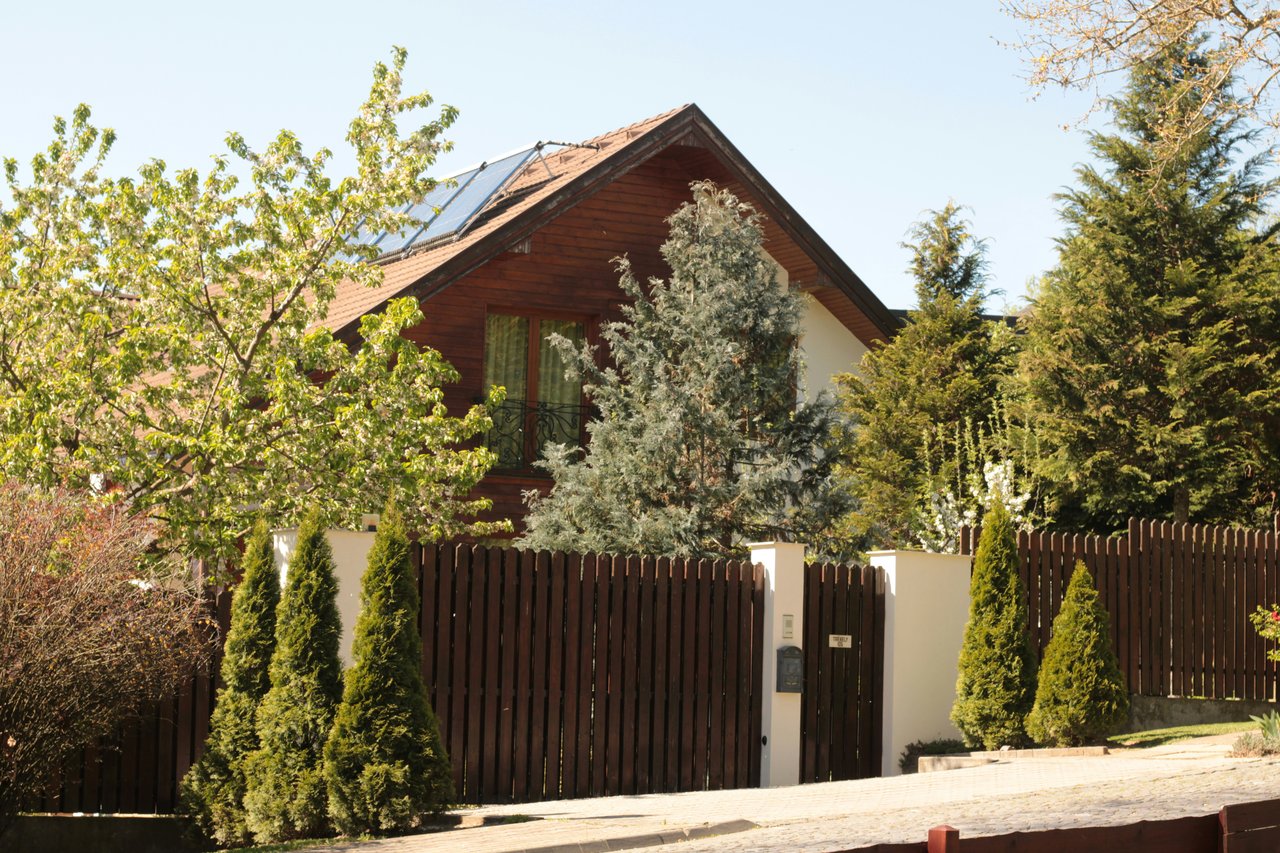
One of the most important provisions for existing homes involves wood fencing attached directly to the house.
Under the approved framework, a five-foot non-combustible section will ultimately be required where fencing connects to the structure.
In practice, that could mean replacing the portion of a wood fence or gate nearest the house with metal or another compliant non-combustible material.
New combustible fences and gates should not be constructed within Zone 0, although the regulations allow repairs to existing fencing.
Sheds and outbuildings located within Zone 0 are also addressed and must have non-combustible exterior roofs and walls.
These are details homeowners and real estate agents should begin noticing when walking a property.
One of the most important aspects of the final proposal is its phased implementation.
California moved away from an immediate, all-at-once approach for existing homes and instead created a multi-year transition focused heavily on education.
Existing homeowners will begin with measures such as:
Local jurisdictions will establish implementation timelines, within five years of the regulation's effective date, for additional measures including:
New construction is treated differently and is expected to comply once the regulation becomes effective.
As of late August 2026, however, there is one additional procedural step to watch: after the Board's August 19 approval, the adopted package is being submitted to the California Office of Administrative Law for review before final approval and publication by the Secretary of State.
In other words, the direction of the regulation is now substantially defined, but property owners should continue watching for the official effective date and any applicable local implementation guidance.
Zone 0 should become another component of wildfire due diligence when purchasing property in an affected area.
A buyer should not simply ask whether a home currently has “defensible space.”
Look more closely.
Does wood fencing connect directly to the house?
Is combustible mulch installed against exterior walls?
Are shrubs planted underneath windows or vents?
Are trees hanging over the roof or beneath the eaves?
Is firewood stacked beside the house?
Is there a wood shed within five feet?
Would modifying the landscaping materially change the property's appearance?
These conditions do not necessarily make a property undesirable. They may, however, identify future maintenance or improvement costs that a buyer should understand before closing.
For higher-end properties with extensive landscaping, mature trees, decks, fencing and accessory structures, those costs could be more significant.
For sellers in wildfire-prone communities, waiting until escrow to discover a potential issue is rarely the best strategy.
A knowledgeable listing agent should begin evaluating the immediate perimeter of the property before the home reaches the market.
That does not necessarily mean undertaking every possible modification immediately.
It means understanding the property.
A seller should know whether the home falls within an applicable fire-hazard area, what conditions exist within the first five feet, what improvements may eventually be necessary, and whether an insurer, buyer, inspector or other professional is likely to raise questions about those conditions.
Early preparation gives the seller options.
Last-minute discoveries create leverage for someone else.
Zone 0 also arrives during an extraordinarily difficult period for California property insurance.
There is an important distinction here.
CAL FIRE's Fire Hazard Severity Zone maps themselves are not used by insurance companies to determine individual insurance rates or underwriting decisions. Insurers use their own wildfire risk models and other property-specific information.
At the same time, California insurance regulations increasingly recognize wildfire mitigation.
The California Department of Insurance's Safer from Wildfires framework requires participating mitigation measures to be reflected through insurance discounts, and a five-foot ember-resistant area is one of the recognized actions.
Depending on the insurer and property, mitigation measures can potentially reduce premiums and may help improve a property's overall risk profile.
That does not mean completing Zone 0 guarantees that an insurance company will write or renew a policy.
It does mean that wildfire mitigation is becoming increasingly relevant to the relationship between the physical condition of a property and its insurability.
For homeowners who complete mitigation work, documentation matters. Keep photographs, invoices, inspection records and other evidence of completed improvements, and discuss the work directly with your insurance broker or carrier.
For California agents working in wildfire-prone areas, Zone 0 should not be treated as a landscaping issue.
It is becoming part of property literacy.
Agents working in affected communities should understand:
Agents should be particularly careful not to promise that a property “complies with Zone 0” or that completing certain work will guarantee insurance coverage.
Our role is to recognize the issue, identify potential concerns, provide reliable resources and help clients conduct appropriate due diligence.
There is another reason this subject requires continued attention.
The state's regulation establishes a baseline, but local jurisdictions are permitted to develop alternative approaches that achieve equivalent wildfire-safety results. Communities may also impose more stringent standards based on their particular fire hazards and local conditions.
For homeowners in Los Angeles County and throughout Southern California's foothill and canyon communities, the state regulation therefore may not be the final word.
Local implementation matters.
There is no reason to wait for an enforcement deadline to begin evaluating a property.
Walk the first five feet surrounding your house and look at it differently.
Look for combustible mulch against the foundation. Check beneath decks and eaves. Clear roofs and gutters. Move firewood and combustible storage away from structures. Remove dead vegetation. Examine tree branches near the roof. Look at the point where wood fencing connects to the house.
Then photograph the improvements you make.
These are relatively simple steps, but wildfire research and California's fire agencies increasingly point to the same conclusion: a home's vulnerability during a wildfire is not determined only by the flames approaching from the hillside. Wind-driven embers can travel ahead of a fire and ignite vulnerable materials immediately surrounding the structure.
That is the problem Zone 0 is designed to address.
For homeowners in California's wildfire-prone communities, regulations like Zone 0 can understandably feel like another layer of responsibility.
But there is a larger shift underway.
Wildfire risk is increasingly influencing how California homes are built, landscaped, maintained, insured, purchased and sold.
For real estate professionals, understanding that intersection is becoming essential.
For homeowners, the objective should not simply be regulatory compliance. It should be creating a property that is safer, better prepared and more resilient while preserving as much of the home's landscaping, character and usability as the regulations reasonably allow.
And for buyers and sellers, the best approach remains the same one we advocate throughout a real estate transaction:
Understand the property before making decisions about it.
At 35 Oaks Property Group, we work throughout Castaic, Hasley Canyon, Santa Clarita and Southern California communities where wildfire risk is part of property ownership. Our responsibility is to stay ahead of changes like these so our clients understand not only what is changing, but what those changes may mean for the property they own, purchase or sell.
This article is intended for general informational purposes and is based on California's Board-approved Zone 0 regulatory package as of August 2026. Regulations, effective dates and local implementation requirements may change as the rulemaking process is completed. Property owners should verify current requirements with CAL FIRE, the California Board of Forestry and Fire Protection, their local fire authority and other appropriate professionals.
--
Fire Hazard Severity Zone designations, defensible space requirements and Zone 0 regulations can change over time. Homeowners, buyers and sellers should verify the current designation and requirements for a specific property through official state and local resources.
CAL FIRE / State Fire Marshal — Fire Hazard Severity Zone Maps
Search current California Fire Hazard Severity Zone maps and learn whether a property is located within a Moderate, High or Very High Fire Hazard Severity Zone.
Los Angeles County Fire Department — Defensible Space & Fire Hazard Reduction
Review current Los Angeles County defensible space requirements, 2026 inspection information, Fire Hazard Severity Zone resources and AB 38 real estate defensible space inspection information.
CAL FIRE — Defensible Space
Review California's guidance for creating and maintaining defensible space, including Zones 0, 1 and 2 and practical steps homeowners can take to reduce wildfire exposure.
California Board of Forestry & Fire Protection — Zone 0
Follow the state's official Zone 0 rulemaking, guidance and resources regarding the ember-resistant area within the first five feet surrounding a structure.
Requirements vary based on a property's location, jurisdiction and Fire Hazard Severity Zone. Property owners and real estate clients should confirm current requirements with CAL FIRE, the applicable local fire authority and qualified professionals.
Who you choose to represent your interests in real estate matters. The brokerage with whom you partner with guides you through the sale or acquisition of a subject property, while advocating on your behalf, and serving as a fiduciary and trusted asset advisor. With distinct standards and dynamic experience, the 35 Oaks team provides exclusive listing services for home and land sellers, and buyer representation for those seeking to purchase real property or vacant land.