Why Southern California Growth Is Moving North
Real Estate August 5, 2026
Real Estate August 5, 2026
For decades, Southern California's growth largely radiated outward from Los Angeles. Communities like the San Fernando Valley, Santa Clarita Valley, and Ventura County gradually evolved from smaller suburban markets into major employment and residential centers.
Today, another shift is underway.
Southern California isn't simply growing—it is reorganizing.
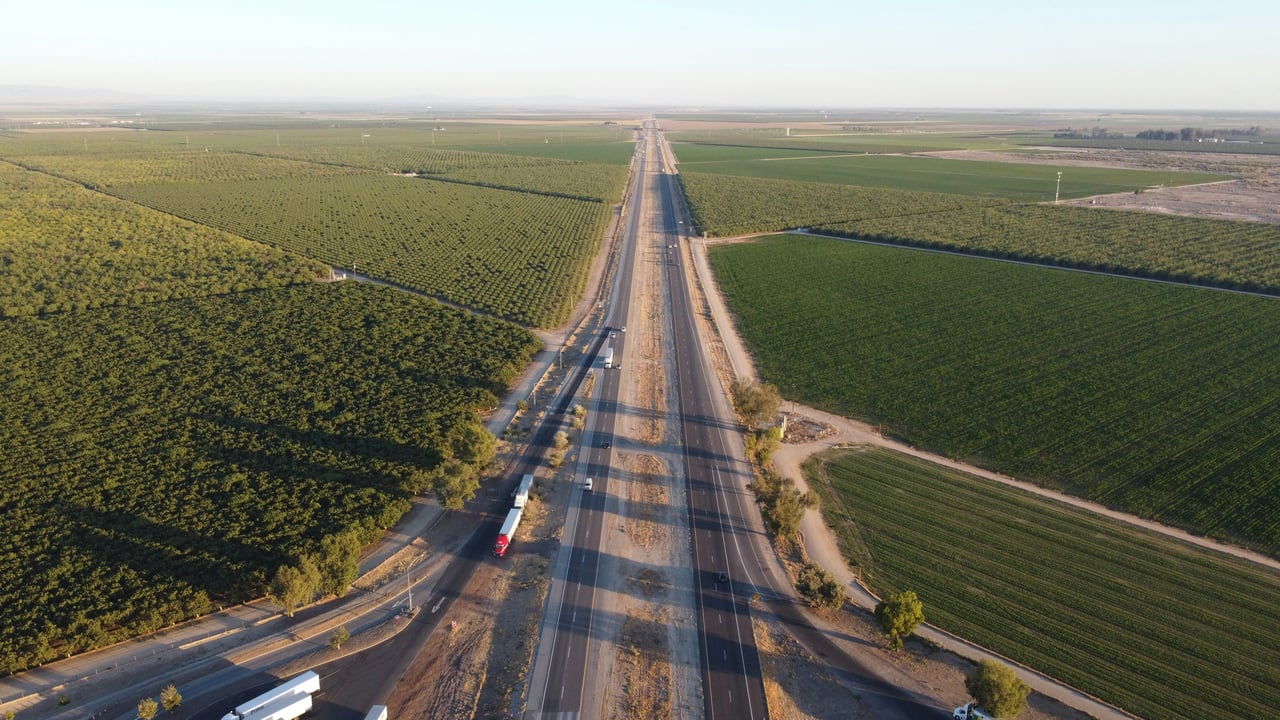
Rather than expanding only outward from Los Angeles, the region is steadily stretching north along Interstate 5 and west along State Route 126. New employment centers, entertainment destinations, logistics facilities, master-planned communities, and infrastructure projects are reshaping areas that were once considered primarily rural.
For homeowners, investors, buyers, and business owners throughout Santa Clarita Valley, these developments are far more than isolated construction projects. Together, they represent a long-term transformation that will influence housing demand, commuting patterns, property values, employment opportunities, and the overall character of our region for decades to come.
At 35 Oaks Property Group, we believe understanding where growth is occurring is just as important as understanding today's market statistics. Real estate values are often driven by what is coming next—not simply what has already happened.
Santa Clarita has long been known as one of Southern California's premier master-planned communities. Today, its strategic location is becoming even more valuable.
Residents enjoy direct access to:
As major development accelerates north of the Grapevine and west along Highway 126, Santa Clarita increasingly serves as the geographic crossroads connecting several expanding employment corridors.
That central location is one reason employers, developers, and homebuyers continue investing in the Santa Clarita Valley.
Perhaps no project better illustrates the region's future than FivePoint Valencia.
Already one of California's largest master-planned communities, the project is expected to continue developing well into the 2030s.
When complete, the community is planned to include approximately 21,500 homes, millions of square feet of office, research, retail, and commercial space, schools, community facilities, parks, recreation areas, and more than 10,000 acres of permanently preserved open space connected by over 50 miles of trails.
Development also continues to evolve.
Los Angeles County recently approved the Entrada South village, bringing more than 1,000 additional residences, neighborhood retail, and another expansion of the Valencia Commerce Center—further strengthening Santa Clarita's employment base while maintaining the community's long-term jobs-to-housing balance.
Individual villages—including Landmark Village, Homestead, Potrero Valley, and Entrada South—will each add hundreds to several thousand homes, along with schools, neighborhood parks, commercial services, and supporting infrastructure over the coming years. Local planning documents also identify future community parks, schools, retail centers, and additional mixed-use development as construction continues in phases.
Rather than simply adding housing, FivePoint is creating another complete urban center—one designed around employment, recreation, preserved open space, and modern community planning.
Historically known for agriculture and oil production, Bakersfield has quietly become one of California's fastest-growing logistics and industrial markets.
National employers continue choosing Kern County because of its available land, lower development costs, central transportation network, and direct access to Interstate 5 and Highway 99.
Healthcare, manufacturing, warehousing, food production, and commercial development have all expanded significantly over the past decade.
The City of Bakersfield is now planning for continued growth through its long-range General Plan, which focuses on housing, transportation improvements, parks, employment centers, and infrastructure capable of supporting future population increases.
Increasingly, Bakersfield functions less as an isolated Central Valley city and more as an extension of the greater Southern California economy.
One of the most visible signs of this transformation sits just beyond the Grapevine.
Hard Rock Casino Tejon officially opened in late 2025 as the first full-scale casino in Kern County.
The approximately $600 million first phase includes more than 150,000 square feet of gaming and entertainment space featuring over 2,000 slot machines, more than 50 table games, multiple restaurants, retail, and live entertainment.
The project immediately became one of Kern County's largest hospitality employers, creating more than 1,000 permanent jobs while supporting thousands of construction positions during development. Visitor demand has already exceeded many expectations, prompting continued expansion planning.
Future phases are expected to include:
When fully developed, the resort is expected to attract millions of annual visitors while continuing to strengthen tourism and hospitality throughout the Interstate 5 corridor.
One of the strongest long-term drivers of real estate appreciation has always been employment.
The Interstate 5 corridor has become increasingly attractive for logistics, distribution, manufacturing, and technology companies seeking efficient access throughout California.
Amazon continues expanding operations throughout Kern County, while other major employers—including Nestlé's new automated distribution facility at Tejon Ranch Commerce Center—are investing hundreds of millions of dollars in large-scale industrial projects that create long-term employment.
Every major employer creates a ripple effect.
New jobs generate demand for housing.
Housing supports retail.
Retail supports restaurants, healthcare, schools, professional services, and local small businesses.
Those economic layers are becoming increasingly visible throughout Kern County and northern Los Angeles County.
While Interstate 5 often receives the headlines, another corridor deserves attention.
State Route 126 continues connecting Santa Clarita with Piru, Fillmore, Santa Paula, and Ventura County through communities experiencing gradual—but meaningful—growth.
Fillmore continues adding new residential neighborhoods, while Piru has carefully planned additional housing and infrastructure improvements intended to preserve its historic small-town character while accommodating measured growth.
For buyers seeking larger lots, agricultural surroundings, or more attainable housing options than much of Los Angeles County, these communities have become increasingly attractive alternatives.
At the same time, improved regional connectivity has strengthened their relationship with Santa Clarita, allowing residents to commute in multiple directions rather than relying on a single employment center.
Rather than competing with Santa Clarita, these communities increasingly complement it as part of one interconnected regional housing market.
Population growth rarely occurs without consequences.
Residents throughout the region are already experiencing:
Many of these investments are positive signs of a healthy regional economy.
However, they also reinforce the importance of thoughtful planning as Southern California continues expanding northward.
Growth has also renewed conversations surrounding conservation.
Large-scale development proposals throughout Tejon Ranch and neighboring areas continue generating discussion regarding wildlife habitat, wildfire resilience, transportation impacts, water resources, and the preservation of California's iconic open landscapes.
Projects such as Centennial have undergone years of environmental review and legal challenges before advancing, reflecting California's ongoing effort to balance housing needs with environmental stewardship.
For many longtime residents, preserving the ranchlands, rolling hills, and natural beauty surrounding Santa Clarita remains every bit as important as accommodating future growth.
That balance will likely define the next generation of development throughout the region.
No single project determines the future of a housing market.
However, when major residential communities, employment centers, transportation investments, industrial development, tourism, and commercial construction all occur simultaneously, they begin reshaping an entire region.
For homeowners throughout Santa Clarita, Hasley Canyon, Castaic, Valencia, Stevenson Ranch, and surrounding communities, these broader trends may influence:
Understanding these forces allows buyers and sellers to make more informed real estate decisions—not simply based on today's market, but on where Southern California appears to be heading over the next 10 to 20 years.
At 35 Oaks Property Group, we believe real estate is about more than buying and selling property.
It is about understanding the economic, demographic, and planning decisions that shape the communities where we live.
Southern California's center of gravity continues moving north.
Santa Clarita sits at the intersection of that transformation, connecting Los Angeles, Ventura County, Kern County, and the Central Valley through one of California's most strategically located housing markets.
While no one can predict every market movement, today's development patterns point toward a future in which Santa Clarita is no longer simply a suburban community north of Los Angeles—it is becoming the center of an increasingly connected regional economy.
For homeowners, buyers, and investors alike, that is a story worth watching.
Who you choose to represent your interests in real estate matters. The brokerage with whom you partner with guides you through the sale or acquisition of a subject property, while advocating on your behalf, and serving as a fiduciary and trusted asset advisor. With distinct standards and dynamic experience, the 35 Oaks team provides exclusive listing services for home and land sellers, and buyer representation for those seeking to purchase real property or vacant land.