How AI Data Centers Could Shape California Real Estate
Real Estate July 25, 2026
Real Estate July 25, 2026
Artificial intelligence is transforming nearly every industry, but one of its greatest impacts may be on the land itself. Beyond AI tools and automation, the rapid expansion of data centers is reshaping land use, energy infrastructure, and communities—from rural America to Southern California.
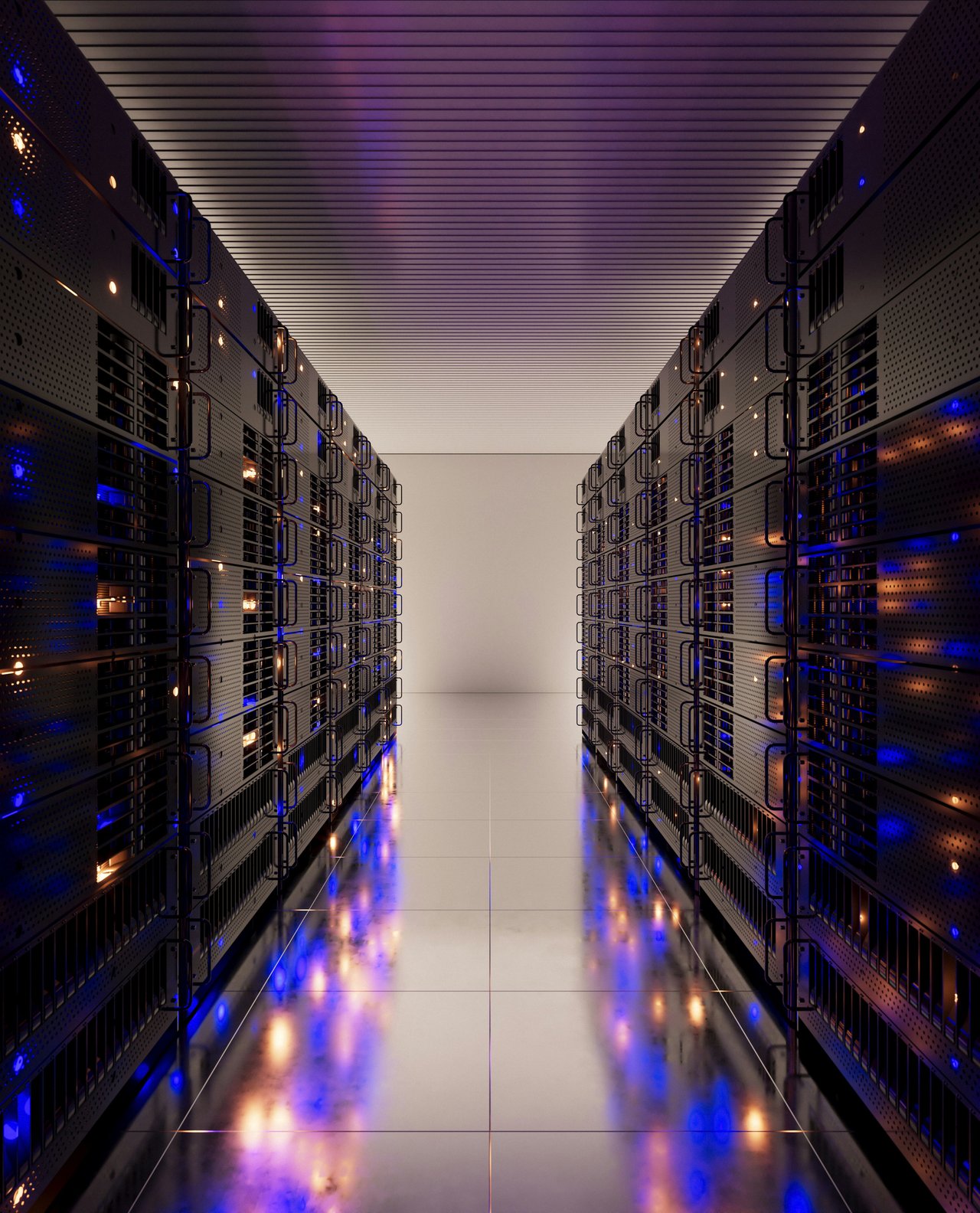
These facilities are the physical infrastructure powering artificial intelligence, cloud computing, streaming services, online banking, healthcare systems, and nearly every digital service we rely on each day. Every ChatGPT conversation, Google search, online purchase, Netflix stream, and cloud-based business application ultimately runs through a data center somewhere.
As demand for AI continues to accelerate, so does the demand for land capable of supporting these enormous facilities. For property owners, investors, buyers, sellers, and local communities, this raises important questions about land use, infrastructure, environmental impacts, and long-term property values.
A data center is far more than a large warehouse filled with computers.
Modern AI data centers contain tens of thousands—sometimes hundreds of thousands—of servers operating continuously, 24 hours a day. Supporting that computing power requires an extraordinary amount of infrastructure, including:
The largest "hyperscale" campuses operated by companies such as Amazon, Microsoft, Google, Meta, and Oracle can consume hundreds of megawatts of electricity—comparable to the power needs of a small city.
Although these facilities generally create far less daily vehicle traffic than warehouses or distribution centers once operational, they require substantial supporting infrastructure and represent one of the fastest-growing categories of industrial development in the United States.
Communities across the country are now determining where data centers belong and how they should fit within long-term planning goals.
Supporters point to meaningful economic benefits, including:
Communities have also raised legitimate concerns regarding:
Because these facilities operate continuously, they often generate a low-frequency mechanical hum from cooling equipment, transformers, and air handling systems. While engineering improvements have reduced these impacts considerably, noise remains an important planning consideration for nearby neighborhoods.
The discussion is not whether data centers are coming—they already are. The question is where they belong and how communities balance economic opportunity with responsible planning.
Perhaps the two largest concerns surrounding AI infrastructure are energy and water.
According to the U.S. Department of Energy and Lawrence Berkeley National Laboratory, data centers account for a rapidly growing share of America's electricity demand, driven largely by artificial intelligence workloads that require substantially more computing power than traditional internet services.
Depending on the cooling technology used, some facilities also consume significant amounts of water. Many newer campuses are transitioning toward air-cooled or closed-loop cooling systems to reduce water consumption, but water availability remains an important consideration—particularly in drought-prone regions like California.
For many rural communities, the challenge extends beyond the building itself. The real question is whether existing substations, transmission lines, electrical grids, and water infrastructure were ever designed to support facilities of this scale.
Like many forms of large-scale development, data centers can create both opportunities and challenges for surrounding real estate.
Industrial land with access to high-voltage electrical transmission, fiber infrastructure, and transportation corridors has become increasingly valuable as developers search for suitable sites. Some rural communities have experienced rising land values, expanded tax revenue, utility improvements, new employment opportunities, and increased commercial investment as a result.
However, not every nearby property benefits.
Residential neighborhoods immediately adjacent to large industrial campuses may experience concerns related to:
As with airports, rail corridors, warehouses, or manufacturing facilities, proximity matters. A data center located several miles away may have little noticeable effect on a residential community, while one proposed immediately beyond a neighborhood can understandably generate significant public concern.
One recent example is Imperial County, where proposals for massive AI data center campuses have sparked debate over water resources, electrical demand, and the future character of rural communities. These discussions illustrate how quickly emerging technology can become a local land use issue.
For buyers and sellers, understanding nearby zoning, General Plan designations, and future development proposals is becoming an increasingly important part of real estate due diligence.
At present, there are no publicly approved hyperscale AI data center campuses within the Santa Clarita Valley.
However, Southern California continues to see growing interest in industrial development that could eventually support this type of infrastructure.
One project receiving attention is the Antelope Valley Commerce Center in Palmdale, a new 510-acre industrial development approved for millions of square feet of industrial uses.
The project is not currently approved as a dedicated data center campus, but its industrial entitlements could potentially accommodate future data center uses through additional discretionary approvals—such as a Conditional Use Permit (CUP)—if permitted under applicable zoning and future Los Angeles County regulations.
As industrial development continues expanding north of Los Angeles, many planners, developers, and real estate professionals are watching these projects closely.
Recognizing the rapid growth of AI infrastructure, the Los Angeles County Board of Supervisors directed the Department of Regional Planning in April 2026 to study data centers and recommend updates to the County's zoning regulations.
Planning staff were tasked with evaluating:
The Board requested recommendations within approximately 120 days, with Planning expected to present its findings during August 2026.
This is a significant milestone because Los Angeles County currently does not define "data center" as a land use.
As of today, Title 22 (Planning and Zoning) contains:
Instead, proposals are generally evaluated under existing industrial land use categories because the County's zoning code predates the rapid emergence of modern AI infrastructure.
Future regulations may establish:
These updates will help determine where—and how—future data centers may be developed throughout unincorporated Los Angeles County.
Artificial intelligence has introduced an entirely new category of due diligence.
When evaluating vacant land, rural acreage, or homes near industrial districts, buyers should begin asking not only what exists today—but what could reasonably be developed tomorrow.
Questions worth exploring include:
Today's neighboring pasture, warehouse site, or industrial parcel may look very different ten years from now. Understanding future land use has become just as important as understanding today's market value.
Land use has always shaped real estate values, often more profoundly than short-term market cycles.
While data centers generally require industrial or manufacturing zoning, California's planning process allows for zoning amendments, General Plan updates, Conditional Use Permits, and other discretionary approvals that can influence how land ultimately develops over time.
Whether these projects represent economic opportunity, infrastructure investment, or neighborhood concern will depend largely on where they are located and how thoughtfully they are planned.
Artificial intelligence is no longer simply changing how we work—it is influencing how communities grow, how infrastructure is built, and how real estate markets evolve.
At 35 Oaks Property Group, we believe exceptional representation begins with understanding not only today's market, but also the planning decisions that will shape tomorrow's communities. Whether you're purchasing a home, investing in land, or evaluating future development near your property, informed decisions begin long before construction starts. Our role is to help clients understand those opportunities and risks with the local knowledge, research, and perspective they deserve.
Who you choose to represent your interests in real estate matters. The brokerage with whom you partner with guides you through the sale or acquisition of a subject property, while advocating on your behalf, and serving as a fiduciary and trusted asset advisor. With distinct standards and dynamic experience, the 35 Oaks team provides exclusive listing services for home and land sellers, and buyer representation for those seeking to purchase real property or vacant land.